Craftsmanship is Dead, Long Live the Craftsman
Two people are weaving rattan.
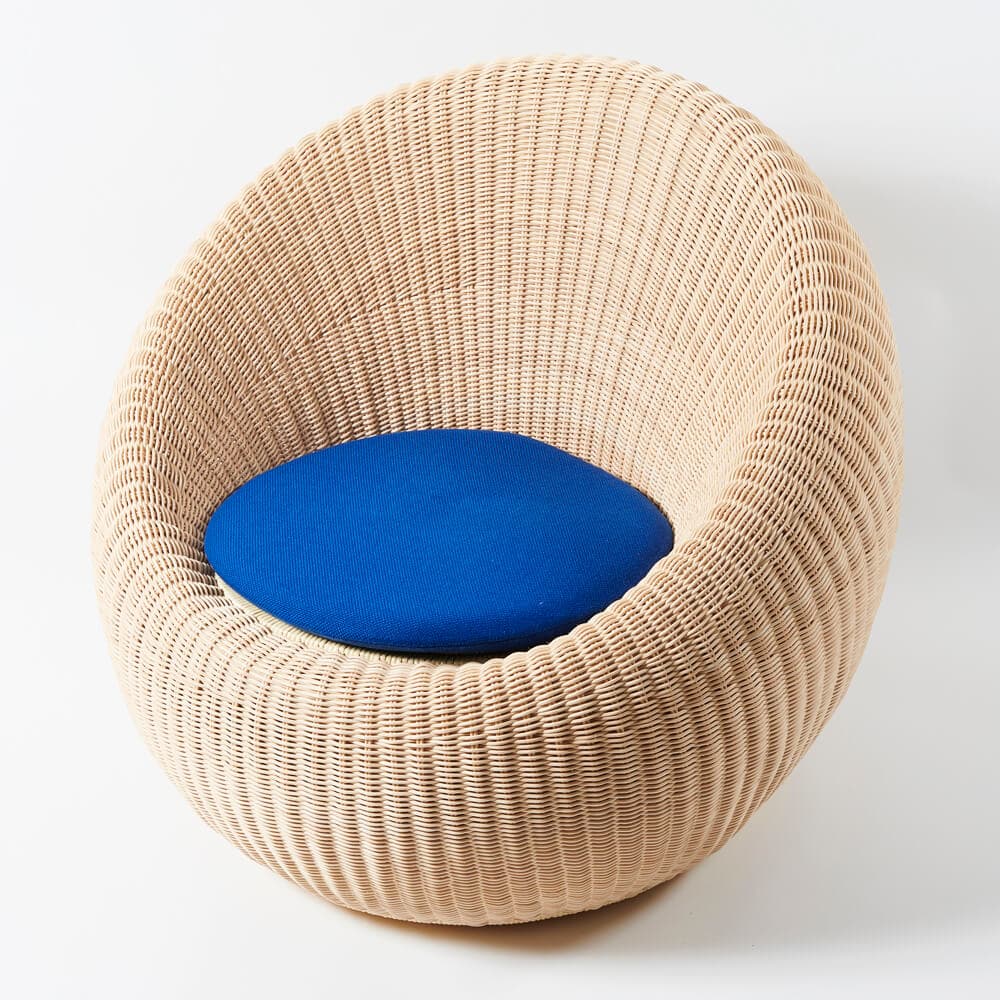
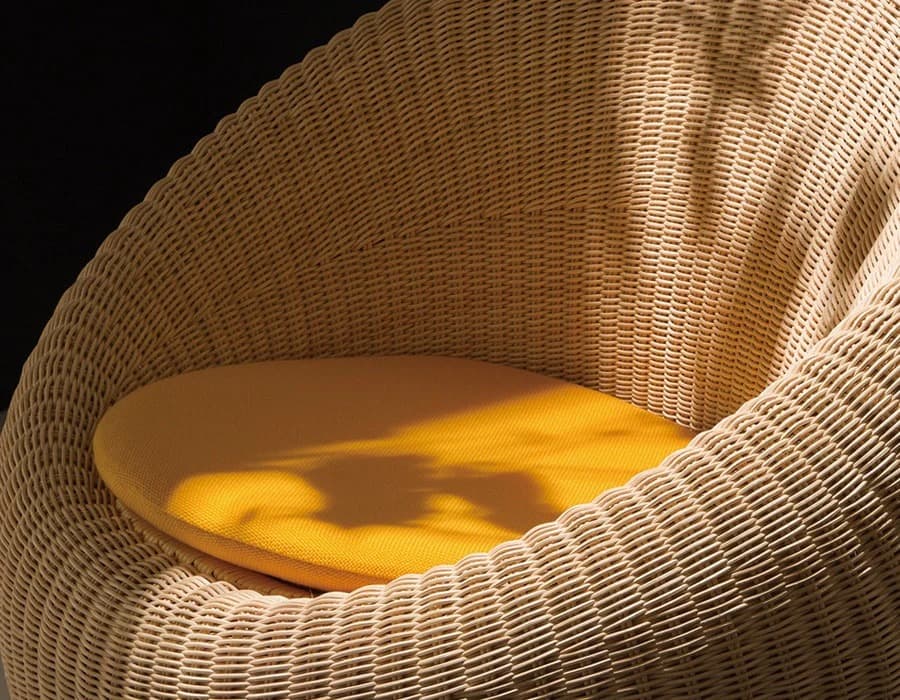
One of them, is one of seven in a workshop in Nagaoka City, Japan, exercising absolute dedication in the production, repair and renewal of bespoke rattan furniture11 “Philosophy | Rattan Chair – YMK Nagaoka,” n.d., accessed June 25, 2026, https://ymk-pro.co.jp/en/philosophy/.. She has been making rattan furniture since her husband's grandfather's generation, and having started from a very young age both of them learnt everything from scratch - from curing rattan to using peculiar jigs to taming peculiar habits of larger machineries22 “Rattan Furniture Manufacturing Process | Rattan Chair – YMK Nagaoka,” n.d., accessed June 25, 2026, https://ymk-pro.co.jp/en/process/.. The pride of their art, she believes, can be seen from the C-3160 rattan round chair designed by Isamu Kenmochi, made exclusively by them33 MaJesús Villanueva, “Isamu Kenmochi | Side Gallery,” in Side Gallery |, September 2025..
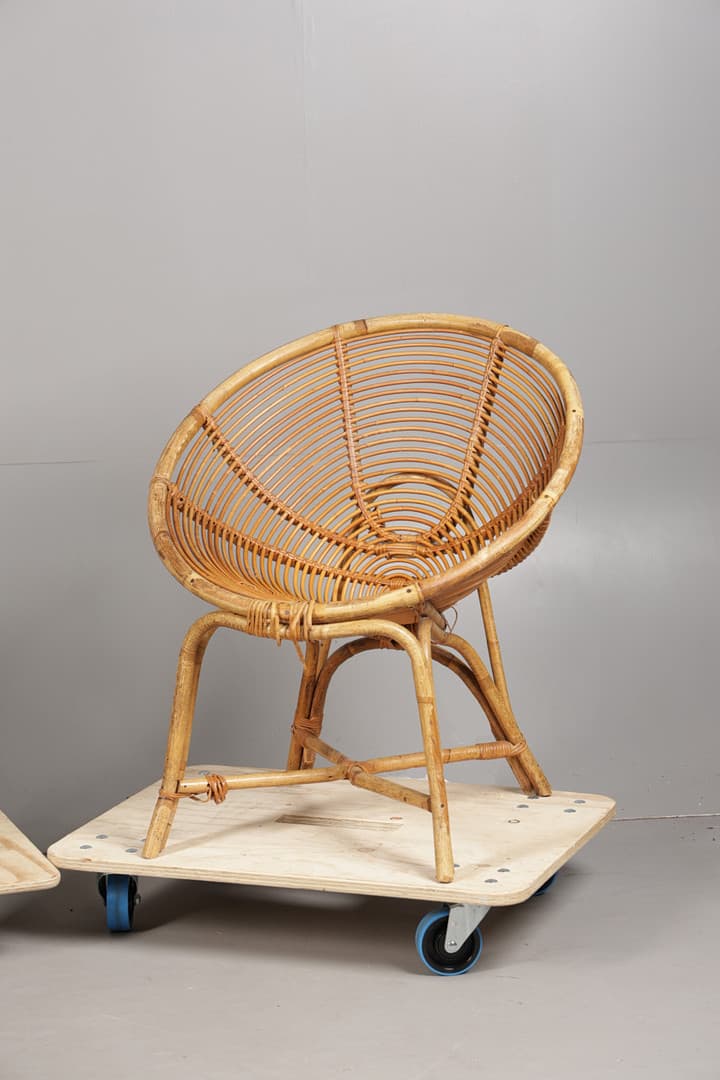
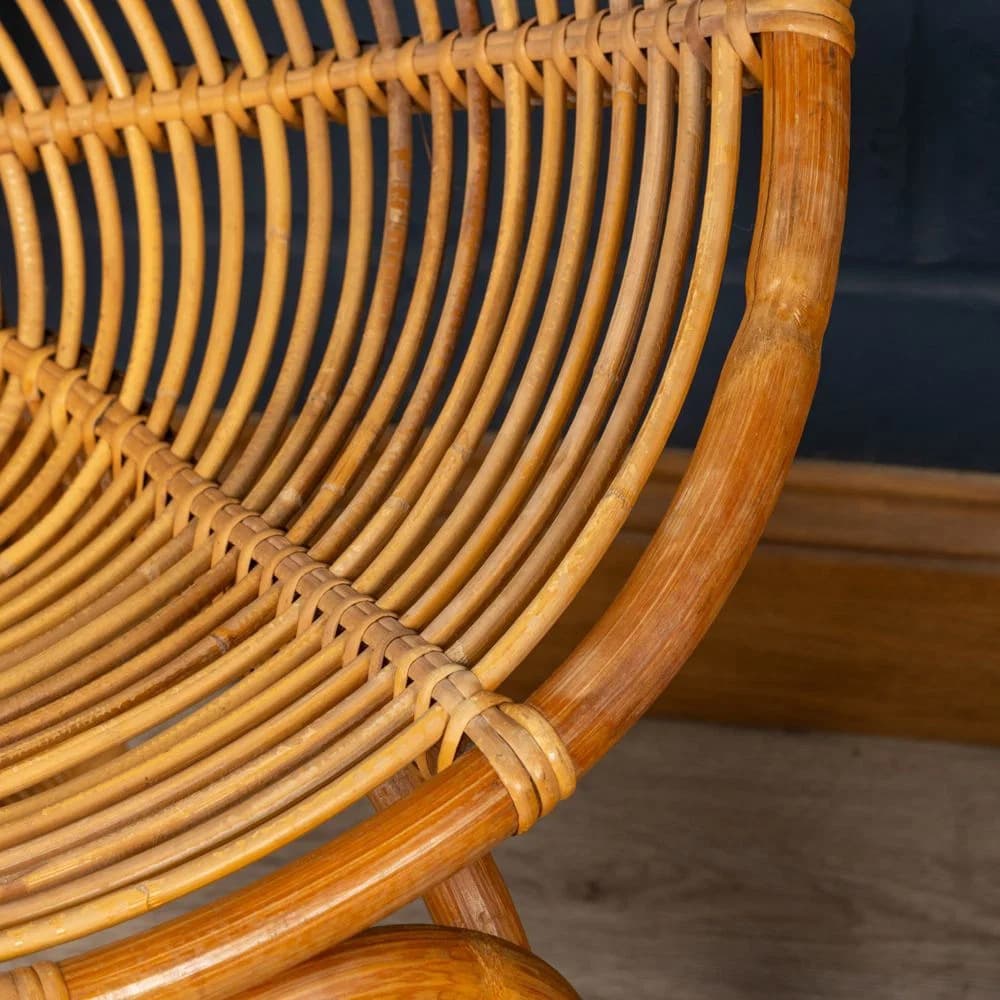
The other, is on a production line somewhere in Cirebon, Indonesia. One of thousands subcontracted, he has been shaping rattan into semi-oval rings on a quota for longer than he can remember4, 5, 64 Deny Willy Junaidy et al., “Digital Preservation of Microgestures in the Making Process of Indonesian Iconic Traditional Rattan Chair Using Immersive 360\circ Learning Videos and Photogrammetry,” In Review, January 2025, https://doi.org/10.21203/rs.3.rs-5876603/v1.5 Aluisius Hery Pratono, “Cross-Cultural Collaboration for Inclusive Global Value Chain: A Case Study of Rattan Industry,” International Journal of Emerging Markets 15, no. 1 (2020): 149–70, https://doi.org/10.1108/IJOEM-01-2017-0028.6 “3.0 CASE STUDY ONE, RATTAN INDUSTRIES IN EAST KALIMANTAN, INDONESIA,” n.d., accessed June 25, 2026, https://www.fao.org/4/x5860e/x5860e04.htm.. His parents did the same, so did theirs, and the tacit deftness has been passed down since the 1930s, as far as he knows. Most days, his whole body is solely involved in bending rattan. Held firmly with two hands and wedged between his inner thighs, the rattan is held in headlock manoeuvre that applies pressure until it gives up its strength. End of each day a truck comes collect the two dozen rings piled up to the side of his front door. The different parts meet in a factory elsewhere and get assembled into the Keong chair.
Which of the two weavers would you consider a craftsperson? There's no right or wrong answers here, yet the question feels uneasy to answer. This tension between the two cases illustrated is what I'd like to explore - what is craft, and what does it mean today. Here's a few ways to look at it.
The Hands
Craft, as we casually understand, is the art of making with one's hands. When we hear the word mentioned, the immediate image that comes to mind is perhaps that of an aged man in his woodworking shop chiselling away at a piece of timber - calloused hands, roughened skin stained with grease from wood planes. For amateurs (as in amator) of modern-day craft comes a broader range of imagery: pottery and throwing clay, glassblowing or jewellery making. And if you happen to dabble in cottage core, the hands are busy crocheting, knitting and so forth. But the hands remain centre to the perception of craft.
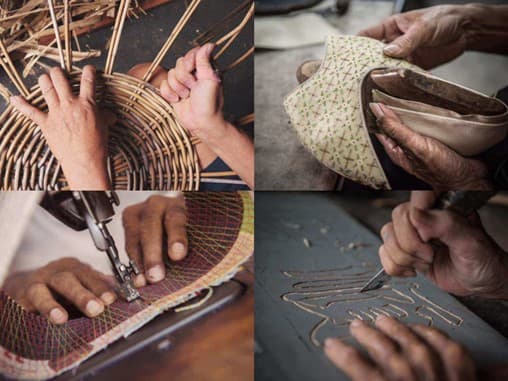
Handcraft comes from a traditional lineage that remains relevant, but is the hand still what defines craftsmanship today? If so, the two weavers use the same rattan, same weave, same hands.
The Prestige
Craftsmanship also comes at a premium nowadays, arguably even more so than at its height of popularity during the Arts and Crafts era. When Chanel sells you a handbag, they emphasise "the exceptional savoir-faire" of their "métiers d'art"77 CHANEL, “CHANEL Métiers d’art 2026 Collection — Savoir-Faire,” in CHANEL, n.d., accessed June 25, 2026, https://www.chanel.com/gb/fashion/collection/savoir-faire-metiers-art-2026/.; Bottega Veneta, meaning the Venetian Artisanal Workshop, sells real luxury that takes time88 “Founding Principles,” n.d., accessed June 25, 2026, https://www.bottegaveneta.com/en-gb/founding-principles.html.; and one of the highest honour a maker gets celebrated for nowadays come in the form of the LOEWE Foundation Craft Prize99 “Tradition and Innovation: The 2026 Loewe Foundation Craft Prize | Gagosian Quarterly,” in Gagosian, May 2026, https://gagosian.com/quarterly/2026/05/14/tradition-and-innovation-the-2026-loewe-foundation-craft-prize/..
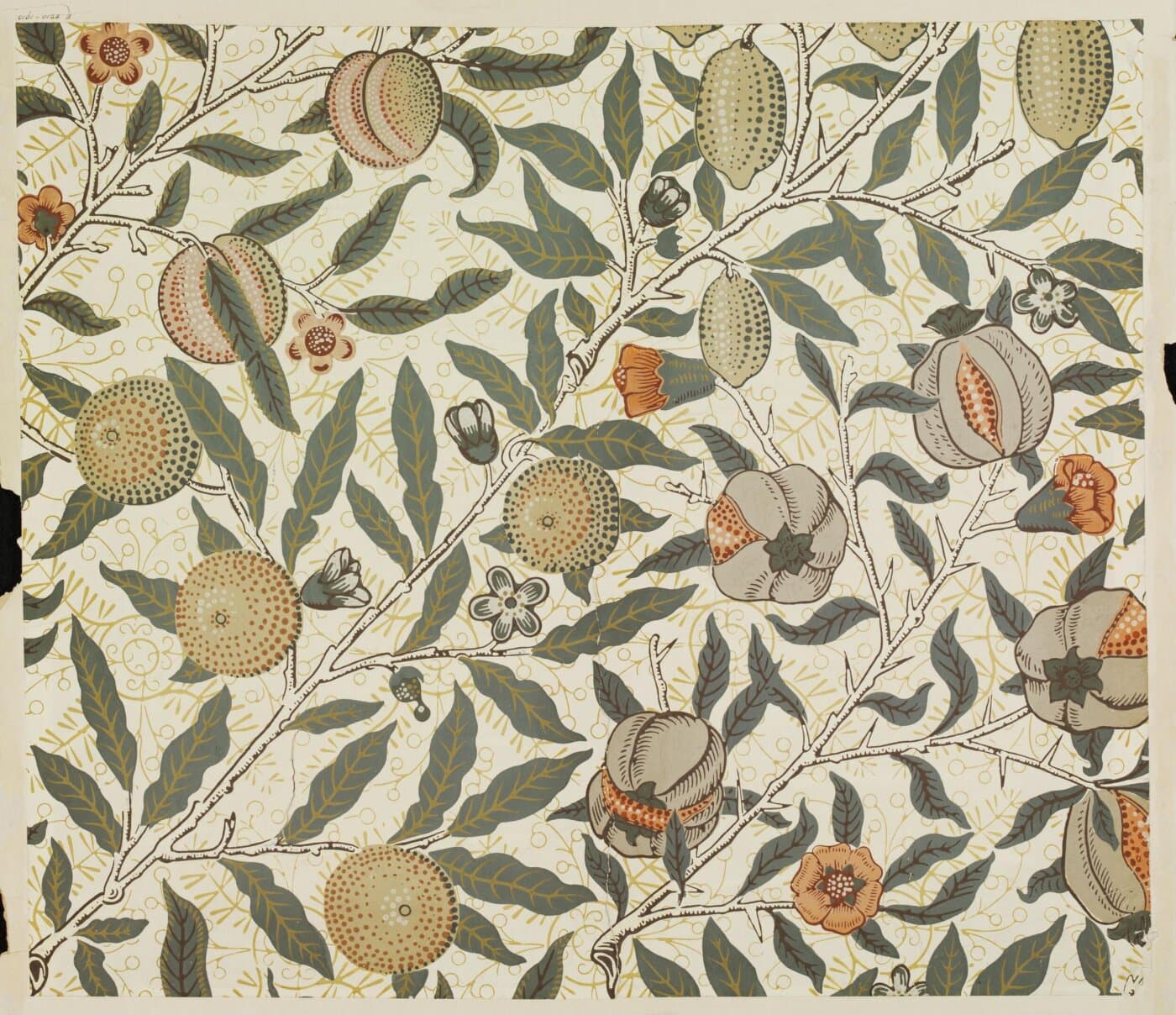
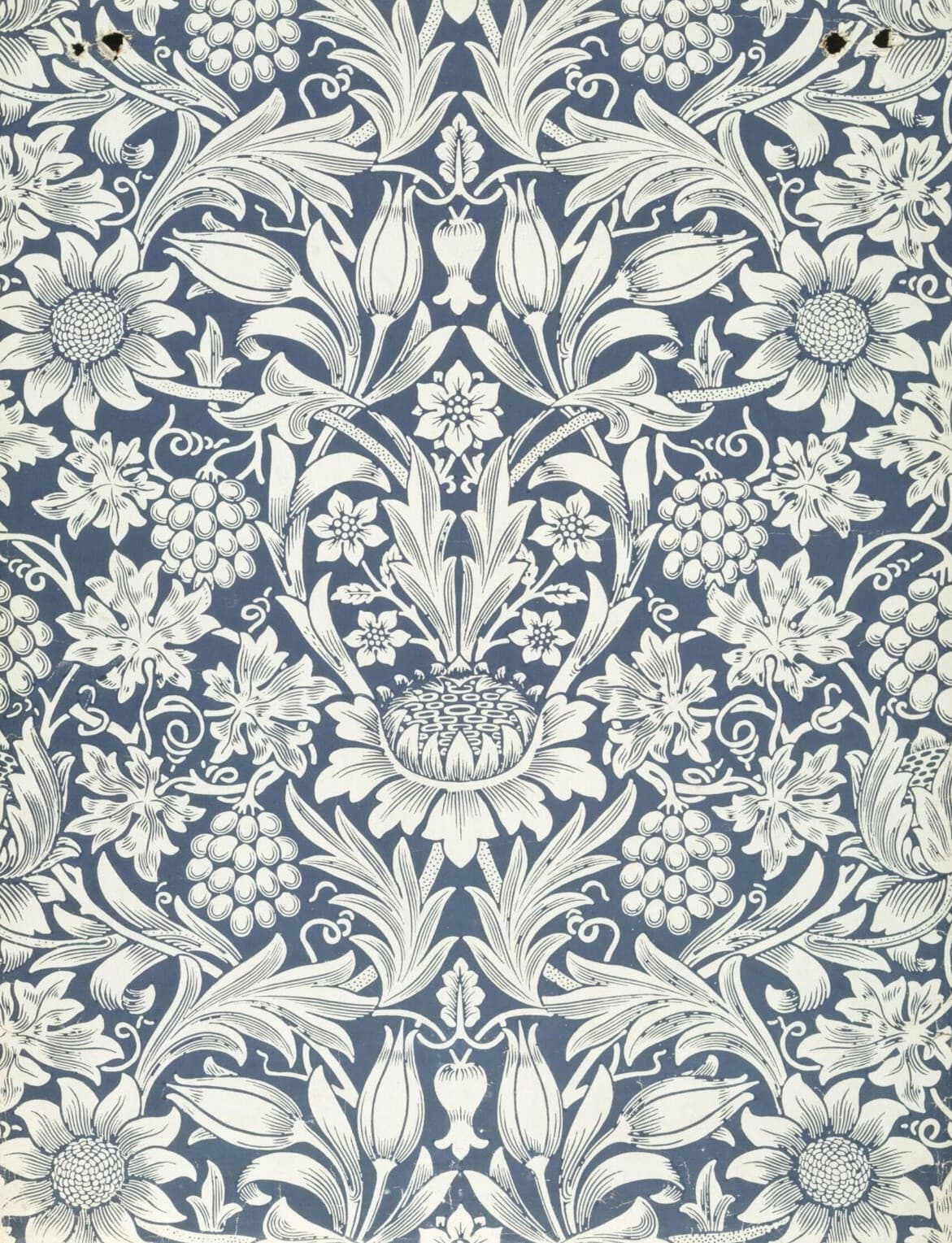
None of this is new of course, as the forefather of Arts and Crafts, William Morris, was incredibly successful commercially selling affordable craft to royal residences like St James's Palace1010 Charles Harvey et al., “William Morris, Cultural Leadership, and the Dynamics of Taste,” Business History Review 85, no. 2 (2011): 245–71, https://doi.org/10.1017/S0007680511000377.. A roll of his wallpapers alone, would casually cost more than one's weekly wage1111 Charles Harvey and Jon Press, William Morris: Design and Enterprise in Victorian Britain (Manchester University Press, 1991).. The romance of craft had always come marked with an expensive price tag, but it speaks more to capitalistic tendencies than the workmanship of the craftsman. In a similar vein, one like myself might gravitate towards the C-3160 for its perceived quality given its price tag, but that's hardly proof that it has superior craftsmanship compared to the Keong chair.
The Maker
Despite the luxury tax and romantic veils, handmade objects speak to us in ways machine-made copies don't. For one, handcraft leaves behind surface qualities that are authentic to its working materials. The node where a leaf once grew on the rattan, intentionally left visible rather than worked away, is the very blemish that quality control deems a defect. For another, the result rests with the maker. Whether through a jig to curve, a mould to shape, or bare hands to bend, the outcome still rides on the maker's judgement. And of course, no two made are ever the same. Where a moulded part is identical to the thousands behind it, each hand-bent ring carries its own slight divergence, the weave a fraction tighter here, the curve easing there.
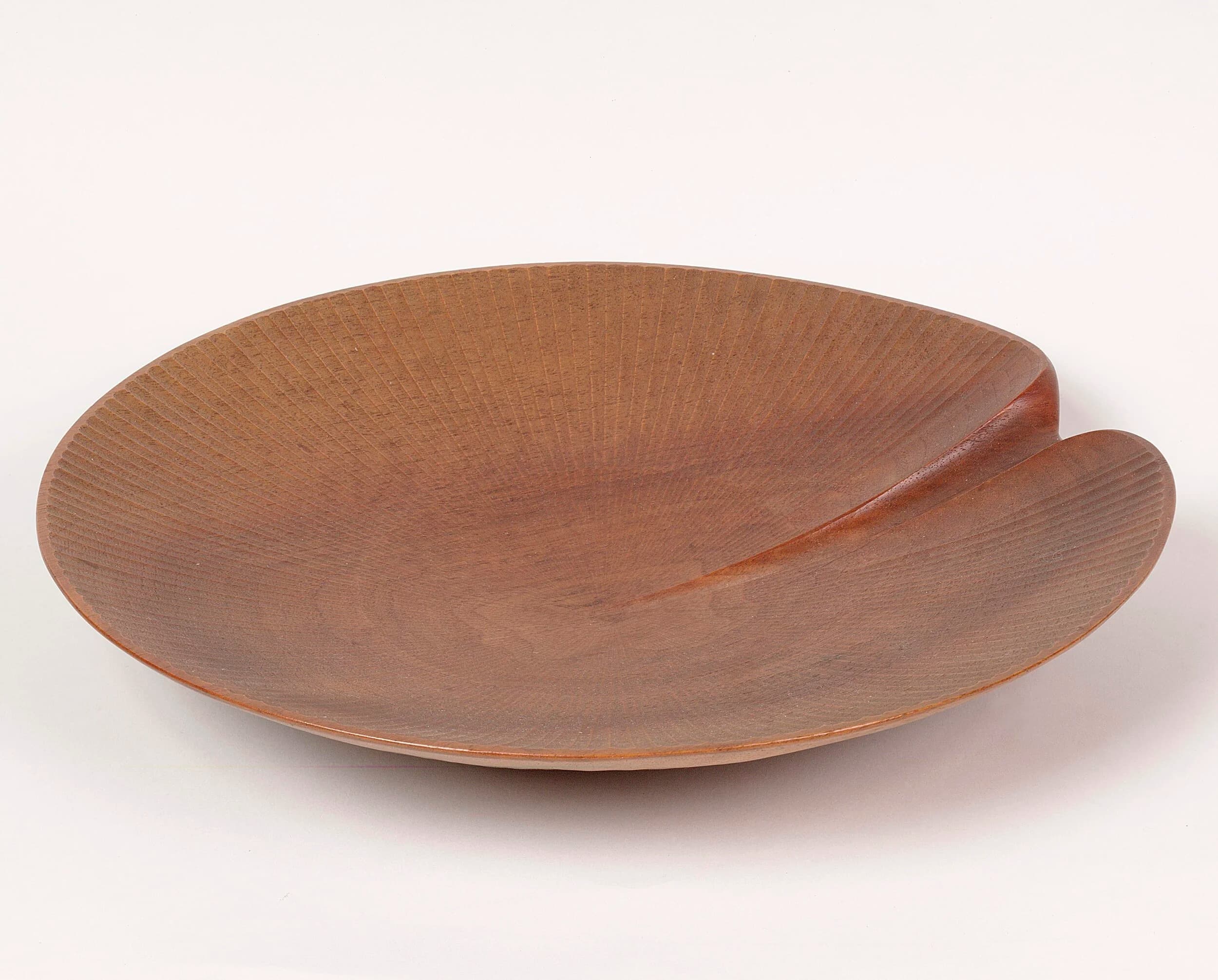
Craft is authentic when the making leaves room for the maker to shape the result, through the judgement, dexterity and care. This is perhaps what holds true at the core of craft, I believe, and runs in a similar vein to what David Pye termed the workmanship of risk1212 David Pye, The Nature and Art of Workmanship, Revised ed., repr (Herbert Press, 2010)..
The Craftsman
A few years ago I experimented with the idea of digital craft in an attempt to isolate what craft means for us today, and what value it holds as technology advances further than we can ever imagine.
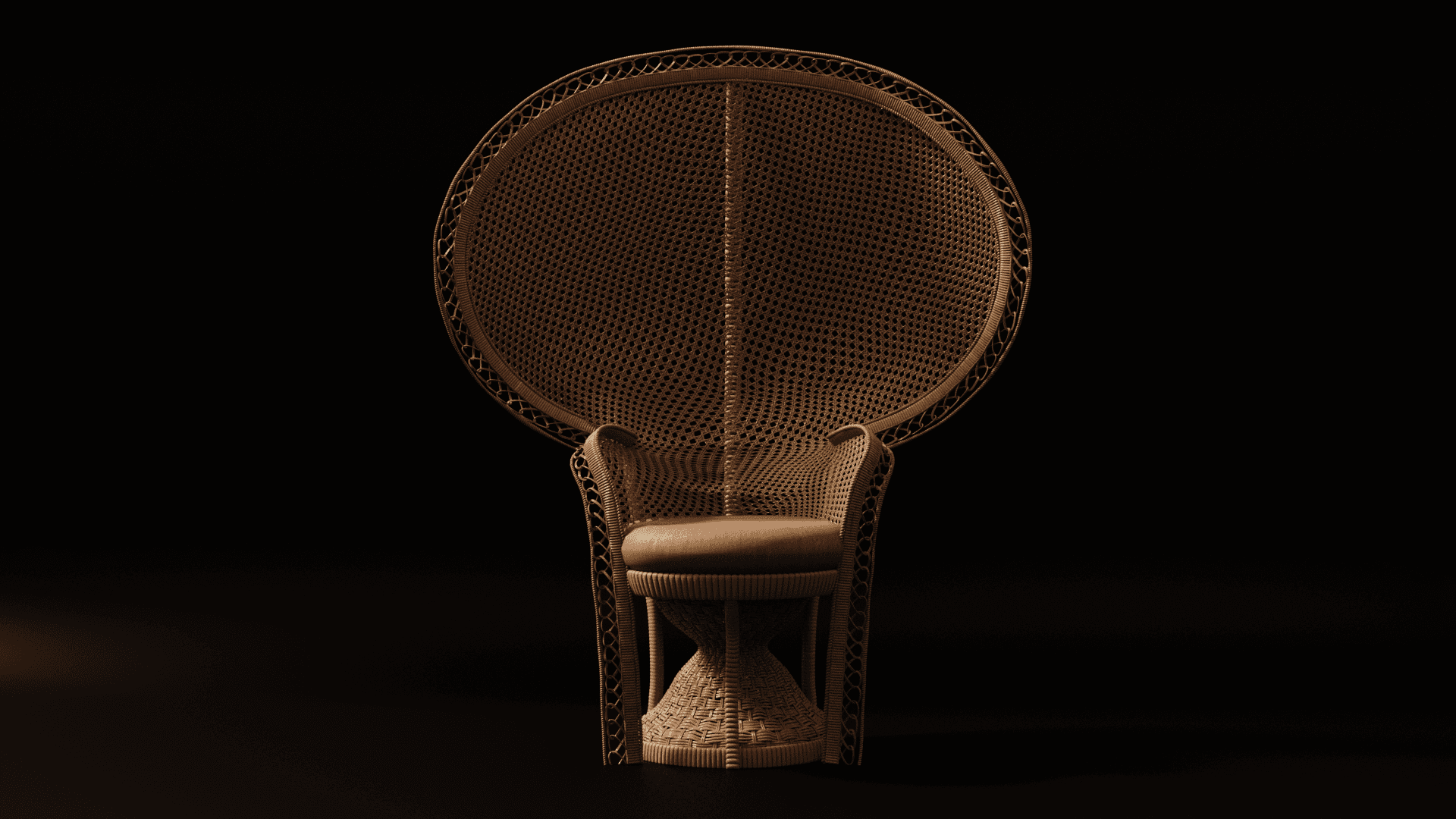
I took inspiration from the Peacock chair: a chair woven from one of the oldest crafts there is; an icon with no designer, and its workmanship serves as the design; a piece that outlasted the industrial revolutions and the trends of mass production. Through many first and second hand sources I researched, studied and eventually reinterpreted its woven techniques into a series of digital tools. In the spirit of workmanship I trialled and erred, then iterated and finally prototyped the wicker Monobloc. Culmination of the work, was a parametrically driven prototype and a 3D printed piece shipped off to Venice for an exhibition. Made with many uncertainties during the process, I took a risk and shipped the final piece off under a tight deadline in a wooden box.
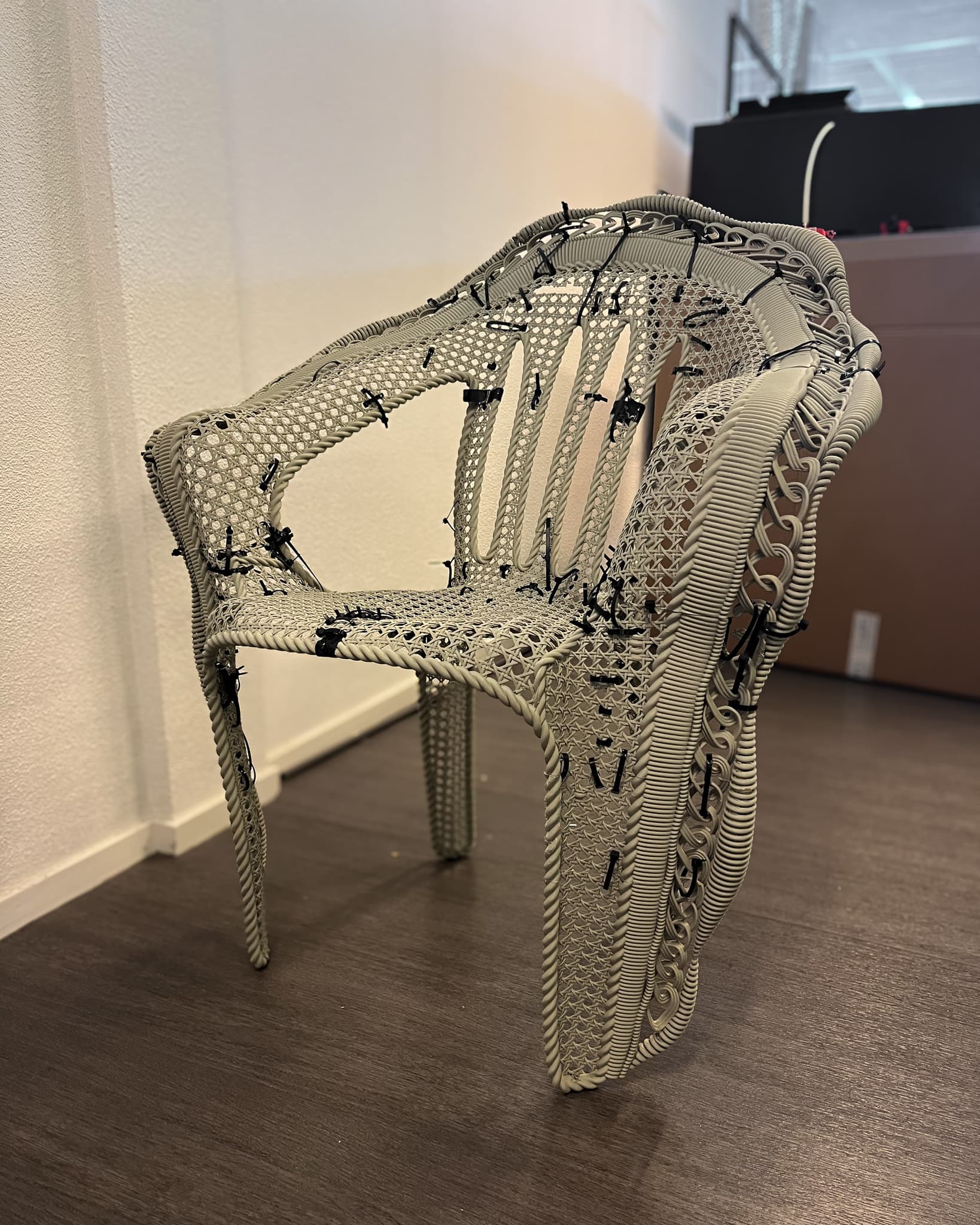
Was I surprised the chair broke when it arrived in Venice? Not really, even though the possibility of it happening hadn't even crossed my mind then. Not even when I was notified that it had to go on a small boat to get through Venice. Must be a blind spot for the green apprentice. Hindsight is 20/20, there's plenty I'd do differently and I'd like to think I've got a better eye for it now.
The wicker monobloc never came to fruition. And at this point, I find myself thinking of the many weavers in Cirebon who never see their crafted parts become the chair. I'd like to think that they are not bothered by it, that as craftsman they embody their art in the making of it, and not in the finished thing carried off to be admired. In a similar vein, I'll revisit my digital craft soon as it strikes me more important and relevant a topic now. There's also more to share on the craft itself, in the iterating, testing, and the making past the first prototype that broke - long live the craftsman. And when its up you can hold it up against the weavers from Nagaoka and Cirebon, see what you make of it.